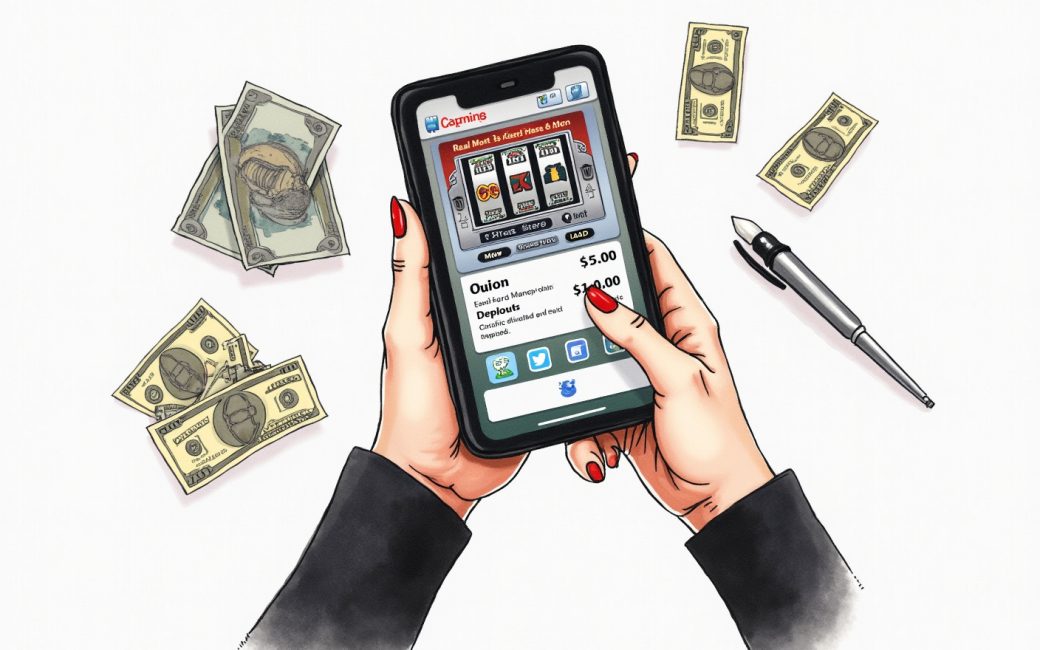
When a casino game stops being free play
Searching for casino games usually turns up free, downloadable apps rather than anything that pays cash. These are social casino apps, and the games inside them — slot spins, virtual blackjack, roulette wheels — run on virtual coins that have no cash value and cannot be withdrawn. Many of these apps lean on licensed media titles, including Wheel of Fortune-branded slot machines, to make the coin-only experience feel like a recognizable casino game; the branding doesn't change the fact that a spin there pays out in coins, not currency. A player who buys coin packs is paying for extended play time, not for a chance at a payout.
To reach an actual cash prize, a player needs one of two different structures: a real-money casino licensed by a state gaming authority, or a sweepstakes casino that uses a promotional currency redeemable for cash under specific entry rules. Confusing a social app with either of these is the most common reason someone downloads a casino app expecting a payout and never gets one — the app was never built to produce one in the first place.
"No deposit" doesn't always mean cash is on the table
A no-deposit offer means different things depending on which of the three models is issuing it. In a social casino app, a "free spins" or "bonus coins" offer simply extends virtual play — there is no redemption path at the end of it, regardless of how the offer is worded. In a sweepstakes casino, a no-deposit promotional currency grant can be converted to cash, but only once the operator's specific redemption conditions — minimum thresholds, identity verification, entry limits — are satisfied. In a licensed real-money casino, a no-deposit bonus is real money with wagering conditions attached before it can be withdrawn.
Before assuming a no-deposit offer can turn into cash, check which of these three models the operator actually runs, and read the redemption or wagering terms attached to that specific offer rather than the marketing copy around it.
Picking a game type that exists where you're playing
Not every casino game is available on every platform, so the choice of game type is really a choice of venue.
- Slots, called tragamonedas in Spanish-language markets, are single-player and spin-driven, and they dominate the catalogues of social and sweepstakes apps because they require no dealer or other players.
- Table games — roulette, craps, baccarat — are dealer-run and appear mainly in physical venues or in live-dealer lobbies on licensed online operators.
- Card games, a subset of table play that includes blackjack and poker variants, follow the same pattern: they need a live or virtual dealer and are far less common in coin-only apps.
Which of these a player can actually access depends on whether they're using a social app, a sweepstakes site, or a state-licensed online casino — not on preference alone.
Five ways a casino game crosses into illegal gambling
A casino-style game becomes illegal gambling when it combines three legal elements — consideration, chance, and a prize — in a jurisdiction that hasn't licensed that activity. A resource on the main categories of illegal gambling lays out the forms this most commonly takes:
- Unlicensed online casino play — a site offering slots, table games or card games for real money without a license from the player's state regulator, often operating offshore.
- Illegal sports betting operations — wagering through unlicensed bookmakers rather than a state-authorized sportsbook, a category the FBI has specifically warned bettors about in connection with offshore and unregulated sports betting sites.
- Unlicensed social gambling or private games — card games or dice games run for a cut of the pot ("raking") outside the narrow social-gambling exemptions some states allow.
- Underground or illegal casino operations — physical venues running slot machines or table games without a gaming license, sometimes disguised as private clubs.
- Sweepstakes or "skill" games operating as gambling in disguise — virtual-currency platforms that technically avoid a cash purchase for play but still function as a wagering mechanism, a gray area that analysis of unregulated gambling activity describes as drawing increasing regulatory attention.
Table games and card games: where the legal line actually sits
The line between a licensed table or card game and an illegal one isn't the game itself — blackjack is blackjack whether a state regulator oversees it or not — it's who's running it and under what authorization. A home poker game with a modest, informal pot may fall under a social-gambling carve-out in some states, while the same game run for a rake, or hosted as a recurring commercial operation, typically does not. California's Penal Code § 330 is a concrete example of how specific a state's definition of a banked or percentage game can get, down to which card games are named in the statute itself.
What makes gambling "illegal," legally speaking
Illegal gambling means wagering on a game of chance or skill for a prize outside the licensing, taxation and consumer-protection framework a state has set up for legal gambling. Whether it's a crime, and how serious a charge, depends entirely on the state: the Texas State Law Library's gambling guide shows how one state defines and prosecutes it, and a breakdown of Texas penalties shows charges ranging from a misdemeanor to a felony depending on the scale of the operation. Because gambling law in the United States is set almost entirely at the state level, states vary widely in what they permit: some, like Georgia, prohibit commercial casino-style wagering outright and confine legal play to a handful of carve-outs such as the state lottery and charitable bingo, while others license full casino floors. A game that's licensed and legal in one state can be a prosecutable offense in a neighboring one — there's no single national answer, and anyone asking whether a specific game is legal where they live needs that state's own statute, not a general rule.
Before you spend anything on a casino app
Confirm which of the three models — social, sweepstakes, or licensed real-money — the app actually runs, read its redemption or withdrawal terms before buying any coin package, and check your own state's gambling statute if real money is involved at any point.